
Read Calhoun Property Tax Records
The Calhoun County Tax Assessor/Collector keeps the land roll along with ownership maps, appraisal data, assessment figures, homestead information, bills, collections, and delinquency details. The county publishes no online assessor or tax-bill portal. A phone or office request is the official route.
| Tax field | What it shows | Where to confirm it |
|---|---|---|
| Owner and parcel | The roll entry tied to the tax unit | Tax Assessor/Collector |
| Land and improvement values | Components used in the assessment | Current county land roll |
| Total assessed value | The assessed figure before the levy is applied | County roll; GIS only as a dated lead |
| Classification and exemption | Tax class and any approved relief | Assessor/Collector |
| Bill and payment status | Amount due, paid, or delinquent | Collector records |
| Tax district and millage | The levies applied to the parcel | County bill and levy records |
A deed's consideration, a GIS assessment, and a current bill answer three different questions. None of the three can stand in for another.
Calculate Calhoun Property Tax
The Mississippi Department of Revenue property-tax guidance lays out the basic formula: true value times the assessment ratio, then times millage. True value is the appraisal basis. Assessed value is the portion the statutory class ratio produces. Millage is the levy applied to that assessed figure.
| Mississippi class | Assessment ratio | General category |
|---|---|---|
| Class I | 10 percent | Single-family owner-occupied residential real property |
| Class II | 15 percent | Other real property not in another class |
| Class III | 15 percent | Personal property |
| Class IV | 15 percent | Public-service property, with statutory treatment |
| Class V | 30 percent | Motor vehicles |
Confirm the class for each parcel. Never infer it from a building's look or an old GIS row. Changed use or homestead status can shift treatment.
Use Calhoun GIS Tax Clues
The MFC/MARIS parcel query exposes fields for cultivated and uncultivated assessment, improvement assessment, and total assessed value, then joins those figures to owner, mailing, legal, deed, acreage, and parcel data. Those numbers come straight from the state layer.
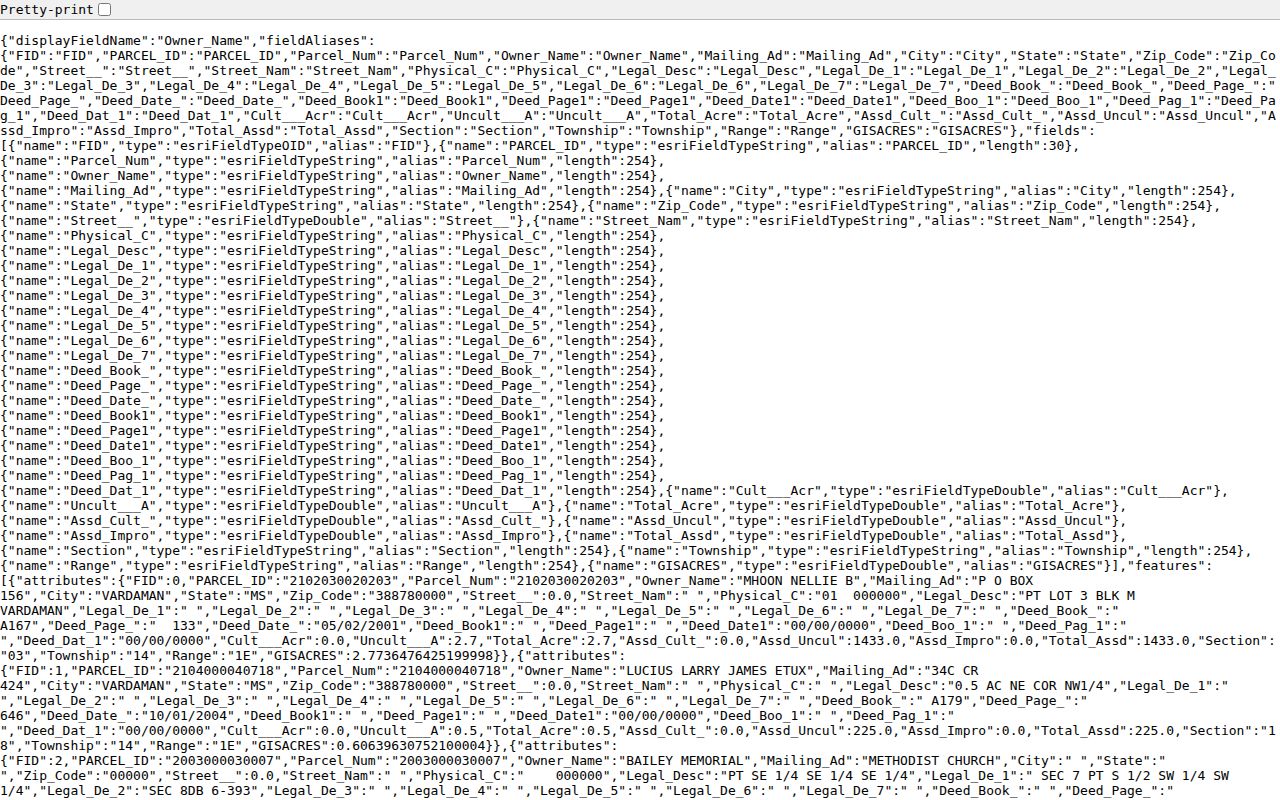
The service shows the fields exist. It publishes no refresh date. A live bill balance, payment, delinquency, redemption status, and full value history are all absent from it. Confirm every one of those with the Tax Assessor/Collector.
Note: GIS can identify the parcel for a request, but it is not the official Calhoun County property tax ledger.
Request a Calhoun Tax Bill
Call Tax Assessor/Collector Bill Malone at 662-412-3140. The office sits at 103 W Main Street, Pittsboro. Current sources list PO Box 698 while an older listing gives PO Box 6, so phone before mailing anything and include a parcel ID whenever you can.
- Locate the parcel key and legal description in the state GIS, or ask E-911 and the assessor to resolve a street address.
- Give the collector the parcel key, owner name, address, and tax year needed.
- Ask for the appraised or true value, classification, land value, improvement value, total assessed value, exemption flags, and tax district.
- Request the current bill, payment date or status, prior unpaid years, delinquency, lien, sale, and redemption information.
- Ask for an electronic or paper copy and a fee estimate because no local copy schedule was located.
A vague question like "what are the taxes" hides the year and status you need. Be precise. A well-formed Calhoun County property tax records request cuts the odds of receiving only a current total. Ask the office to separate the appraisal year from the collection year. Name each levy or district on the bill too.
When the owner, mailing address, or acreage conflicts with the deed or GIS result, request the source and effective date of the roll change. The county publishes no routine refresh schedule. A recent closing may lag the roll. The newest recorded deed can explain ownership. It does not prove the tax account was updated.
Calhoun Tax Terms Defined
One parcel can display several values at once. Define the field before comparing a bill, a deed, or a sales estimate.
- True or market value
- The appraisal basis used before the statutory class ratio is applied.
- Assessed value
- The amount produced by applying the class ratio to true value.
- Millage or levy
- The tax rate applied to the assessed amount.
- Homestead exemption
- Relief tied to qualifying ownership and occupancy after approval.
- Tax lien
- A legal claim associated with unpaid tax; status must be checked in current records.
A recorded sale price proves a past transaction. It is not automatically the current true value. An assessed figure, likewise, is no private appraisal of what the land would likely sell for.
File Calhoun Homestead Claims
The Mississippi DOR homestead guidance sets the application window from January 1 through April 1. The claimant must own and occupy the home as a primary residence under the state rules. Applications go through the county tax office. The GIS service plays no part.
Ask the Calhoun office which identity, ownership, occupancy, spouse, vehicle, and parcel documents are required. A move, a marital-status change, or a deed change may force reapplication. Never assume a prior owner's exemption follows the land. Approval never follows automatically from a residential parcel.
The state exemptions page also puts the burden of proof on the claimant for statutory exemptions and describes the Board of Supervisors role. Get the current form and local instructions early.
Check Delinquent Calhoun Taxes
The county posts no online tax-sale or delinquent-bill list. Ask the collector for the tax year, unpaid principal, added charges, sale status, purchaser information if public, and the redemption deadline or amount. Then search DuProcess. Look for County Tax Sale, City Tax Sale, County Tax Release, or City Tax Release instruments matching the parcel.
A legal notice can announce a sale that never happened. A tax-sale entry may likewise miss the final effect of redemption or later litigation. Read the collector's account beside the Chancery land record.
Litigation adds one more source. Calhoun Chancery Court handles tax-related actions, quiet-title cases, liens, partitions, and some foreclosure matters. MEC began local electronic access in 2023 but requires an account login. So ask the clerk directly. Request the case number, parties, filing and disposition dates, parcel or legal-description references, orders, sale confirmation, and any lis pendens. A docket entry is only a lead. The filed order and the recorded land instrument settle it.
Contest a Calhoun Assessment
Start at the Calhoun County office. Ask how the assessor set the value, class, land and improvement components, acreage, and exemption status for your parcel. A strong appeal packet includes photographs, measurements, repair estimates, comparable sales, and any survey or deed that exposes a factual error in the property records. Keep the dollar dispute and the ownership question apart. They follow different tracks. The DOR appeal guidance lays out the Mississippi process, which runs from local review to written appeals before the Review Board and Board of Tax Appeals. Deadlines shift with each decision and stage. Get the dated local notice and current instructions before you count the days.
Appeal window. Contact the Calhoun office as soon as the roll or notice opens; the research did not verify one county-specific deadline.
Historic Calhoun Tax Rolls
Old Calhoun County tax rolls answer questions a current tax bill cannot. The MDAH Calhoun tax-roll catalog covers combined personal and land taxes from 1818 through 1841, then separated categories afterward. Some 1868/69 lists did not survive, so plan around that gap.
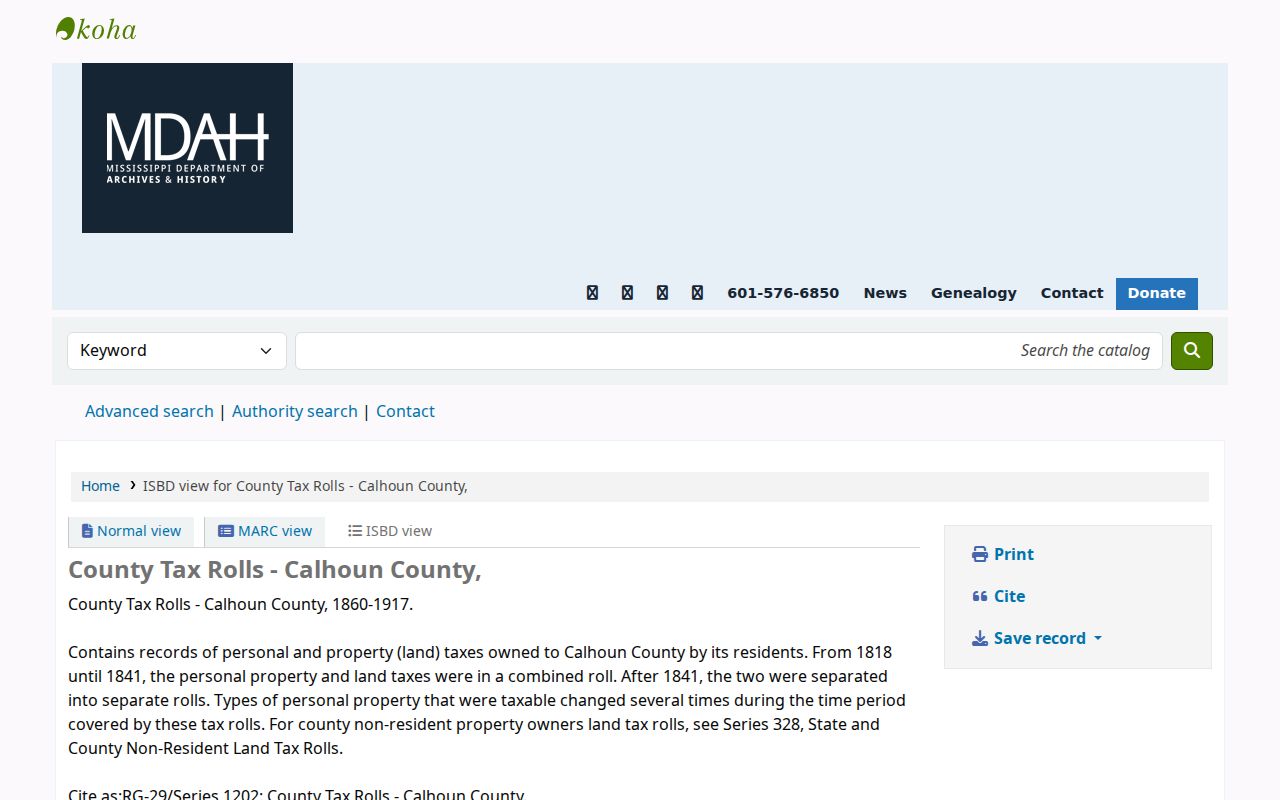
These historic property records give context on ownership and value, not a running parcel balance. Treat the catalog as a finding aid. Item-level archive records deserve a direct check before you quote any person, tract, or amount. For the distinction between assessed, market, and sale figures, the Calhoun County property value page breaks it down, while current bills, exemptions, collections, and appeals stay with the tax office.
Get Calhoun Tax Records Offline
Put your request in writing. Identify the parcel, the owner of record, the tax year, and the exact deed or bill line you need. Ask for electronic delivery plus a fee estimate up front. If the Calhoun County office withholds part of the file, request the exemption citation. Ask as well for a separable copy of everything else. The Mississippi Public Records Act opens non-exempt records to inspection and copying. No adopted agency procedure is in place. The general rule allows access within one working day. Even an adopted procedure cannot stretch delay past seven working days. Fees stay capped at actual search, review, duplication, and mailing costs. None of this pauses a tax appeal deadline or unseals confidential data.